
Getting the knowledge out of people's heads so everyone can use it
Nobody writes it down because writing is slow and nobody reads it anyway. Record the conversation instead, let the tools produce the first draft, get the expert to correct it, then test it on someone who doesn't know the job.
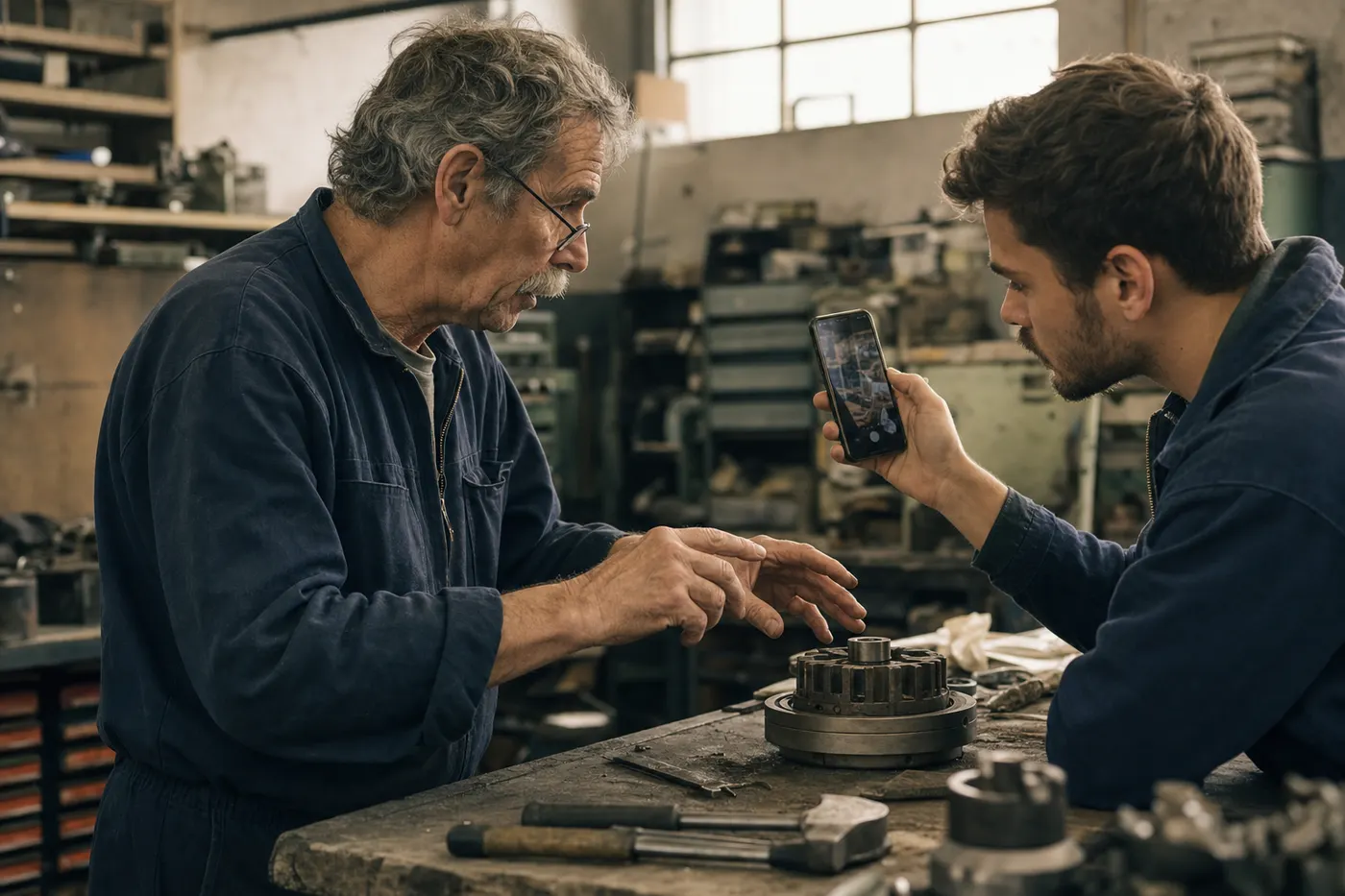
Why it's stuck in heads
Three reasons, and they're all reasonable. Writing is slow and the expert has a job to do. The expert doesn't know what they know – the thing that makes them good is 100 small judgements they've stopped noticing. And nobody reads documents, so the last attempt at a manual sits in a folder from 4 years ago and everyone learned by asking anyway.
The tools change the first reason completely and the second one partly. They do nothing about the third unless the knowledge lives where it'll actually get used.
The interview
An hour with the expert, recorded, with someone asking the questions. Not "write down what you know", which gets you a shrug, but questions that pull the judgement out:
- Walk me through the last one you did, start to finish.
- What do you check first, and why that?
- When does it go wrong? What does wrong look like?
- What would a new person get wrong that you'd never get wrong?
- What do you do when the customer, or the supplier, or the drawing, is unusual?
The last two are where the real knowledge is. The happy path is in the old manual. The exceptions are in the expert's head.
From the recording to the first draft
The recording goes to an assistant with a plain instruction: write the procedure as steps, the rules of thumb as a list, and the exceptions as "if this, then that". The draft will be wrong in a dozen places and that's fine, because correcting is fast and writing is slow. The expert reads it with a pen for half an hour. In our experience this is the step that unlocks the whole thing – people who'll never write will happily correct.
The new-person test
A write-up the expert's approved isn't finished yet. Give it to someone who doesn't know the job and watch them try to use it on a real case. Every question they ask is a gap. Add the answers, then test again with a second person. Two rounds usually gets you a procedure that works without the expert in the room.
Where it lives
In one place that people and the assistants can both read, in the internal ring. Not on a personal drive, and not in 6 formats. Each piece has an owner, usually the expert, and a review date 6 months out, because the knowledge changes and an unreviewed procedure is quietly wrong by the second year. Keeping agents on one platform applies to knowledge as much as to tools – one home.
What not to capture
Some judgement should stay judgement. The expert's call on whether to take on a difficult customer, or what to say to a supplier who's let you down, isn't a procedure. Capture the facts and the rules of thumb around it and leave the decision with a person. A procedure that tries to automate taste gives you confident bad calls.